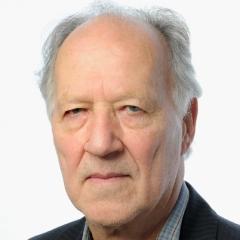
Werner Herzog's Essential Quotes: A Deep Dive into Film, Life, and Travel
Werner Herzog is not merely a filmmaker; he is a philosopher, an adventurer, and a poet of the human condition, whose work challenges conventions and probes the depths of existence. Across a prolific career spanning over six decades, Herzog has crafted a distinct voice, both on screen and off. His profound and often startling observations on cinema, life's absurdities, and the transformative power of travel have resonated with audiences worldwide, establishing a unique philosophical framework that defies easy categorization. This article delves into a collection of essential Werner Herzog quotes, offering a window into the mind of a visionary who sees the world with an unparalleled clarity and curiosity.
From the jungles of the Amazon to the icy plains of Antarctica, Herzog’s journeys have shaped not only his films but also his worldview, impregnating his words with an authenticity born from direct experience. His statements are rarely polite or conventional; instead, they are sharp, insightful, and often laced with a darkly humorous eccentricity that is unmistakably Herzogian. Prepare to Discover Werner Herzog's Profound Wisdom: Best Quotes, as we explore the enduring power of his reflections.
Herzog's Philosophy on Filmmaking: Beyond the Storyboard
For Herzog, filmmaking is less about meticulous planning and more about intuitive discovery. He famously shuns storyboards, viewing them as shackles on creativity. "I think the worst that can happen in filmmaking is if you're working with a storyboard. That kills all intuition, all fantasy, all creativity," he states, encapsulating his belief in spontaneity and the organic evolution of a project. This aversion to rigid pre-visualization stems from a profound trust in the moment, in the unforeseen beauty or chaos that erupts when a camera is rolling.
He sees cinema not as an academic exercise but as a raw, visceral experience. "Film is not the art of scholars but of illiterates," is one of the most potent Werner Herzog quotes on the subject. This isn't a dismissal of intelligence, but rather an assertion that film communicates on a deeper, more primal level—a visual language understood by all, regardless of formal education. It speaks to the gut, to the subconscious, bypassing intellectual filters to create a direct emotional impact. Herzog's dedication to the craft is comprehensive, encompassing every facet: "I like and I love everything that has to do with cinema: writing, directing, editing, creating music, and even acting." This holistic engagement ensures that his vision permeates every frame, creating a singular, cohesive artistic statement.
For aspiring filmmakers, Herzog's approach suggests a vital lesson: sometimes, the greatest art emerges not from strict control, but from embracing uncertainty and allowing intuition to guide the creative process. Trust your instincts, be open to serendipity, and understand that the most powerful narratives often speak loudest when they bypass the purely academic.
Life, Ambition, and the Human Condition: A Herzogian View
Herzog's insights into life itself are equally provocative, often challenging conventional notions of ambition, success, and reality. He distinguishes sharply between personal drive and a more profound purpose. "Ambition is to be the fastest runner on this planet, to be the first on the South Pole, which is a grotesque perversion of ambition. It's an ego trip, and I'm not on an ego trip. I don't have ambitions - I have a vision." This distinction highlights a core tenet of his philosophy: true purpose transcends self-aggrandizement, focusing instead on a larger, often quixotic, vision that drives one's creative and personal endeavors.
His vision often grapples with the grand indifference of the cosmos. "The universe is monstrously indifferent to the presence of man," he observes, a stark yet liberating statement that underscores humanity's fragile place within the vastness of existence. This perspective, rather than leading to despair, seems to fuel his relentless pursuit of extraordinary experiences and stories, suggesting that our significance lies not in cosmic importance but in the unique, often absurd, dramas we enact.
Herzog also champions lived experience over theoretical knowledge, famously declaring, "Every man should pull a boat over a mountain once in his life." This iconic statement, often linked to his film Fitzcarraldo, is a metaphor for confronting seemingly impossible challenges, pushing human limits, and embracing the profound wisdom gained through arduous, real-world struggle. He values authenticity to such an extent that he despises superficiality: "I despise formal restaurants. I find all of that formality to be very base and vile. I would much rather eat potato chips on the sidewalk." This quote perfectly captures his rejection of pretense and his embrace of raw, unvarnished life. To truly Unravel Werner Herzog's Unique Perspective: Top Insights, one must appreciate his deep-seated desire for genuine, unmediated experience.
The Call of the Wild and the Road: Herzog on Travel
Travel for Herzog is not tourism; it is an immersive, revelatory act. His films are often born from arduous journeys into remote and challenging landscapes, and his personal travel habits reflect this philosophy. "The world reveals itself to those who travel on foot," he states, advocating for a pace that allows for genuine observation and engagement with one's surroundings. Walking, for Herzog, is a meditative and profound way to connect with the essence of a place and its people, a far cry from the insulated experience of modern transport.
His packing philosophy is equally minimalist and purposeful. "I travel without barely any luggage. Just a second set of underwear and binoculars and a map and a toothbrush," he reveals, emphasizing functionality and freedom from material burdens. This approach allows him to remain agile, adaptable, and focused on the journey itself rather than the accoutrements of travel. He even muses on the alternatives to his primary calling: "I’m quite convinced that cooking is the only alternative to film making. Maybe there’s also another alternative; that’s walking on foot." These Werner Herzog quotes illuminate his belief that true understanding comes from direct, unencumbered engagement with the world.
For those seeking to enrich their own travel experiences, Herzog offers valuable advice: shed the excess, slow down, and allow yourself to be vulnerable to the landscape and its inhabitants. The deepest insights are often found not in luxury, but in simplicity and direct interaction.
Unconventional Wisdom: Herzog's Most Striking Observations
Beyond the grand philosophical statements, Herzog's unique perspective yields some of the most startling and memorable quotes. He possesses a remarkably literal mind, humorously noting, "I am someone who takes everything very literally. I simply do not understand irony, a defect I have had ever since I was able to think independently." This literalness may contribute to his profound insights, allowing him to perceive truths unclouded by social conventions or rhetorical subtleties.
His observations of the natural world are equally uncompromising. Who else could declare, "Look into the eyes of a chicken and you will see real stupidity. It is a kind of bottomless stupidity, a fiendish stupidity. They are the most horrifying, cannibalistic and nightmarish creatures in the world," and make it sound like profound zoological commentary? These eccentricities are not just for show; they are integral to his way of seeing, a refusal to accept the mundane or the conventional definition of things.
Even silence, for Herzog, is not an absence of sound but a presence of something more unsettling: "Do you not then hear this horrible scream all around you that people usually call silence?" This line speaks to an acute sensitivity to the underlying anxieties and tensions that often go unnoticed in everyday life. And his vivid descriptions of the natural world, such as his reflection on the jungle’s malice, "In the face of the obscene, explicit malice of the jungle, which lacks only dinosaurs as punctuation, I feel like a half-finished, poorly expressed sentence in a cheap novel," demonstrate his poetic ability to articulate the terrifying beauty of nature.
The Man, The Myth, The Legend: Embracing the Herzog Persona
Herzog understands and even encourages the myths that surround him. When asked about the tall tales and legends, he responds, "I invite any sort of myths [about myself] because I like the stooges and doppelgangers and doubles out there. I feel protected behind all these things. Let them blossom! I do not plant them, I do not throw out the seeds." This embrace of his public persona, often embellished with anecdotes like the time he was shot by an air rifle during an interview and nonchalantly dismissed it with, "It is not a significant bullet," reveals a man comfortable with the theatricality of his own existence.
He is not an activist, as he clarifies, but his work often carries a potent message simply through its unflinching portrayal of reality and human striving. Herzog works with an almost innate rhythm: "I work very fast and steadily, and I don't hardly ever notice that I'm working. It feels like just breathing or walking when I do films." This natural, effortless engagement with his craft further cements his image as a man profoundly aligned with his creative purpose, living his art rather than merely producing it.
Conclusion
The collection of Werner Herzog quotes offers far more than mere soundbites; they are philosophical anchors to a life lived deliberately, dangerously, and with an unwavering commitment to truth, however uncomfortable. From his radical views on filmmaking and his challenging perceptions of ambition, to his reverence for experiential travel and his distinct, often eccentric, take on the human condition, Herzog invites us to look deeper, question harder, and embrace the beautiful, monstrous indifference of the universe with open eyes. His words are not just an inspiration for filmmakers, but a guide for anyone seeking a more authentic and deeply felt existence in a world often consumed by superficiality.